Nitric oxide in plain English
A gas your blood vessels make on purpose, why a Nobel Prize was given for finding it, and why amino acids keep appearing in supplements because of it.
A gas that carries a message
Nitric oxide is a very simple molecule: one nitrogen atom and one oxygen atom. For most of the twentieth century it was known mainly as an exhaust gas. Then in the 1980s three researchers worked out that the lining of your blood vessels makes it deliberately, and uses it to tell the muscle in the vessel wall to relax. In 1998 they shared a Nobel Prize for it.
When that muscle relaxes the vessel widens, and a wider vessel carries more blood at lower pressure. This is not a fringe idea or a supplement industry invention. It has been in every physiology textbook written since the discovery, and it is why nitric oxide comes up in so many conversations about circulation.
Where the amino acids come in
The cell makes nitric oxide from an amino acid. An enzyme called nitric oxide synthase takes L-arginine and produces nitric oxide and citrulline as a pair. That is the entire reason arginine appears in circulation formulas, sports powders and brain supplements.
There is a catch, and it is a well documented one. Swallowed arginine is largely broken down by an enzyme called arginase before it gets into the bloodstream. This is where citrulline becomes interesting: it survives the trip, reaches the kidney and is converted there into arginine. Gram for gram, swallowed citrulline raises blood arginine more reliably than arginine itself.
So a formula that carries both is not being padded out. It is a reasonable piece of design, and the MemoClear panel carries arginine in two forms and citrulline in two more.
Why a label that prints the amounts is useful
Nitric oxide is a mechanism, not a promise, and the amount of any ingredient is the part a reader can actually weigh. That is where a panel like MemoClear’s earns its keep: four separate amino acid entries, each with its own figure, instead of a single blend weight covering all of them. You can look every one of them up. The how to take it page covers the routine itself.

Questions on this article
No. Nitrous oxide is laughing gas, a different molecule used as an anaesthetic. Nitric oxide is the signalling molecule made in blood vessels.
Beetroot, rocket, spinach and other leafy vegetables are high in nitrate, which the body converts along a different route to the same end. That is why beetroot juice turns up in sports research.
More from the MemoClear articles
How to read a supplement facts panel in two minutes
Serving size, percent daily value, the two asterisks, and the proprietary blend trick. Once you know the shape of the panel you can judge any bottle.
Read it How toWhat %DV actually measures, and why five entries have no number
The percent daily value column confuses more people than any other part of a label. Here is what it is measuring and what its absence means.
Read it EverydayBrain fog: what people mean by it, and what actually helps
Brain fog is not a diagnosis. It is a description, and the things that shift it most are unglamorous, free and well evidenced.
Read it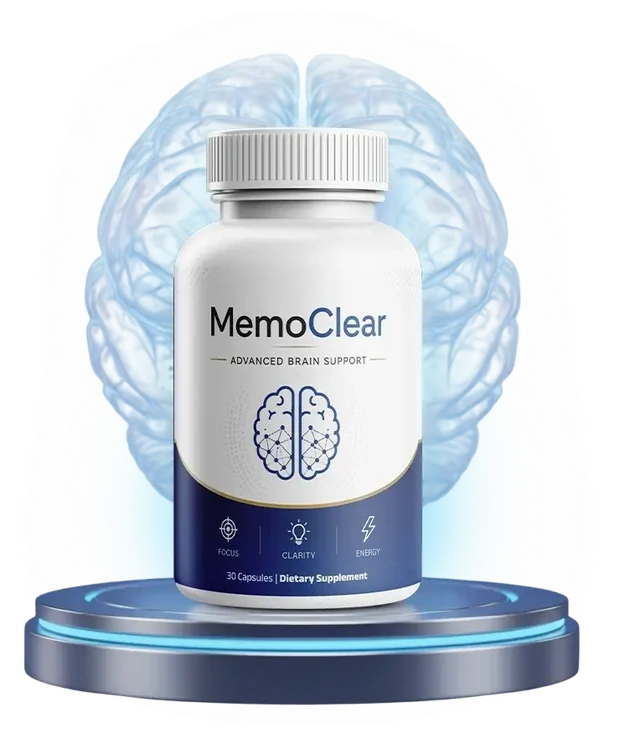
Order MemoClear today
Pick a two, three or six bottle order at the seller's checkout. Two months from the day it lands to decide whether you keep it.
The order is completed on the seller's own secure checkout, where the final total, your address and your payment are confirmed. Sixty days to ask for the money back, counted from the day the parcel arrives.