Where arginine and citrulline turn up in everyday food
Before you judge a 200 mg capsule, it helps to know what a chicken breast, a handful of pumpkin seeds and a wedge of watermelon already supply.
Supplements are not the only source
Every amino acid on the MemoClear panel is also in food, often in far larger amounts than a capsule holds. That is not an argument against supplements; it is context, and context is the thing most sales pages leave out.
Arginine
Turkey and chicken, pork, pumpkin seeds, peanuts, soybeans, chickpeas, lentils and dairy. A typical mixed diet supplies somewhere between three and six grams a day, and a single chicken breast carries well over a gram. The capsule declares 200 mg of L-arginine plus 200 mg of L-arginine AKG.
Citrulline
Watermelon is the famous source, and the pale flesh nearest the rind holds more than the sweet red middle. Cucumber, pumpkin, bitter melon and other gourds contain it too. Amounts vary a great deal with variety and ripeness, so a figure for one melon does not transfer to the next. The capsule declares L-citrulline HCL and L-citrulline malate at 100 mg each.
Beta alanine
Beef, pork, poultry and fish, mostly reaching you as part of carnosine and anserine rather than as free beta alanine. Vegetarians take in noticeably less, which is the group for whom supplementation is most often discussed. The capsule declares beta alanine at 40 mg.
Niacin
Chicken and turkey breast, tuna, salmon, beef, liver, peanuts, brown rice and fortified breakfast cereals. Most people in a country with fortified staples get plenty. The capsule declares niacin, at 47 per cent of the daily value, which is a real contribution rather than a token one.
What to do with this
Use it as a ruler. When a page tells you a capsule is packed with something, ask how it compares with dinner. Sometimes the answer is that the capsule is the more concentrated source by a wide margin; sometimes it is that a meal already gives you ten times as much. Either answer is useful and you can only reach it when the label prints real numbers, which supplement facts page.
Questions on this article
For most people a varied diet supplies these amino acids in quantity. Whether a supplement adds anything on top is a separate question, and one worth asking a dietitian rather than a sales page.
Cooking changes the shape of proteins but the amino acids themselves survive ordinary cooking. Very long, very high-heat cooking can reduce the availability of some.
More from the MemoClear articles
Nitric oxide in plain English
A gas your blood vessels make on purpose, why a Nobel Prize was given for finding it, and why amino acids keep appearing in supplements because of it.
Read it How toHow to read a supplement facts panel in two minutes
Serving size, percent daily value, the two asterisks, and the proprietary blend trick. Once you know the shape of the panel you can judge any bottle.
Read it How toWhat %DV actually measures, and why five entries have no number
The percent daily value column confuses more people than any other part of a label. Here is what it is measuring and what its absence means.
Read it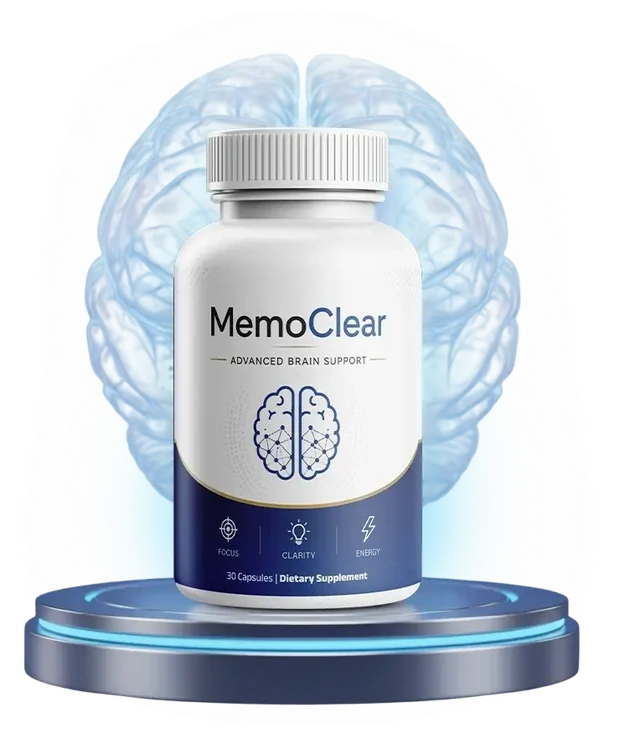
Order MemoClear today
Pick a two, three or six bottle order at the seller's checkout. Two months from the day it lands to decide whether you keep it.
The order is completed on the seller's own secure checkout, where the final total, your address and your payment are confirmed. Sixty days to ask for the money back, counted from the day the parcel arrives.